
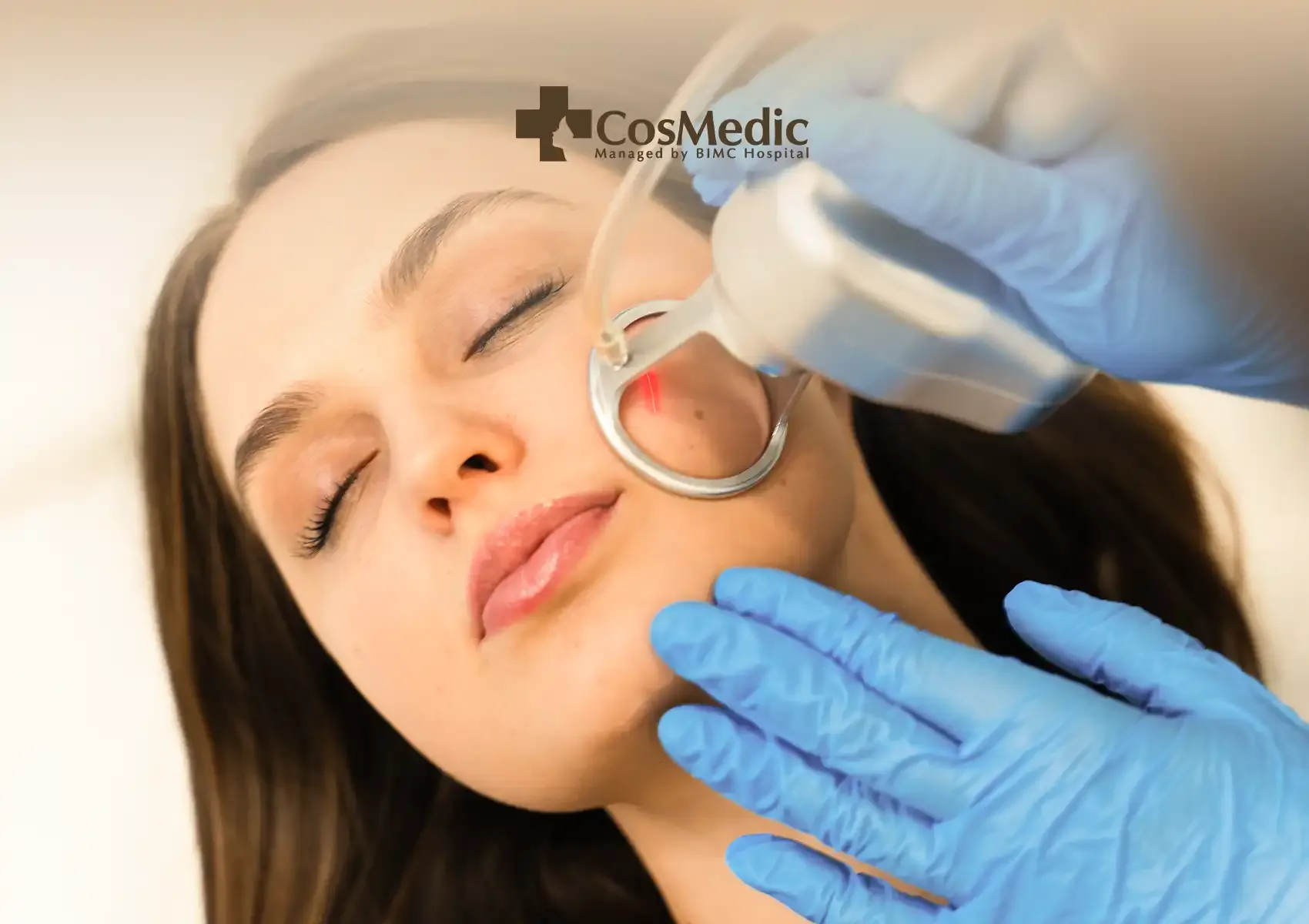
Skin changes are gradual. Fine lines appear, the surface becomes less smooth, and marks from acne or sun exposure become more noticeable. A CO2 laser is a well-established way to treat these surface concerns. As a resurfacing treatment, it works on both the outer and deeper layers of the skin to encourage a smoother, more even appearance over time. This article explains what the treatment involves, who it suits, and what recovery really looks like, so you know what to expect before you decide.
What a Fractional CO2 Laser Actually Does
A carbon dioxide laser delivers controlled energy that removes microscopic areas of damaged tissue and stimulates the skin's natural healing response. Unlike traditional resurfacing, which can treat the entire surface of the skin, a fractional CO2 laser creates many tiny treatment zones while leaving surrounding skin intact. The untreated areas act as a reserve of healthy tissue that supports healing and helps make recovery more manageable.
The goal of fractional resurfacing is to encourage skin renewal and collagen remodelling. As the skin heals, the treatment stimulates the production and reorganisation of collagen, a protein that helps provide structure and firmness. Over the following weeks and months, this process can refine skin texture, soften fine lines and wrinkles, and reduce the appearance of some acne scars. Some improvement in uneven pigmentation and mild skin laxity may also be seen as a secondary benefit of this renewal, although they are not the primary focus of treatment and are approached with care.
Ablative and Fractional, in Plain Terms
Two terms often come up and are worth defining clearly. Ablative means the laser removes a thin layer of skin, not just heats it. Fractional means the laser treats the skin in a pattern of small columns instead of the entire surface. A fractional CO2 laser combines both approaches, offering precise results with a recovery that is generally easier than older methods.
Who the Treatment Tends to Suit
Fractional CO2 laser resurfacing is commonly used for concerns such as acne scarring, fine lines and wrinkles, uneven texture, enlarged pores, and sun-damaged skin. Research supports its use for acne scars, although the number of treatments needed varies depending on the severity of the scarring and the treatment approach.
This treatment is not suitable for everyone. Skin type and tone are important considerations because laser resurfacing can cause temporary or longer-lasting changes in pigmentation, particularly when more intensive settings are used. A doctor will assess your skin carefully before treatment. Active skin infections, a tendency to develop raised scars, certain medications or other medical conditions may also mean treatment needs to be delayed, modified or avoided.
Fractional CO2 laser is one of several non-surgical treatments used to improve the surface and deeper layers of the skin. If sagging or significant skin laxity is the main concern, your doctor can discuss whether laser resurfacing or another treatment approach is more appropriate. A consultation lets your doctor assess your skin, medical history and goals before recommending a plan.
Preparing for Your Treatment
Good preparation helps the skin respond well and can reduce downtime and risk. Your doctor will give you instructions suited to your skin at your consultation.
If you have not had laser or chemical peeling before and do not already use exfoliating skincare, a short course of retinol for about two weeks beforehand is often recommended. This helps prime the skin and may reduce downtime and the risk of complications. Retinol and other exfoliating skincare products are then paused around three days before the procedure, so the skin is calm and ready on the day.
Treatment is also postponed if there is an active skin infection in the area, which needs to settle before resurfacing can go ahead.
How the Session Is Carried Out
A consultation is the first step, allowing your skin type, concerns and medical history to be reviewed before treatment is planned. At BIMC CosMedic, laser resurfacing is performed by our doctors, including our dermatologists and licensed physicians, dr. Risma, dr. Rosa, dr. Sissy, and dr. Theresia, within our accredited hospital setting. This means medical oversight and proper clinical equipment are part of the treatment throughout. It is commonly used on the face, neck and décolletage, and is also a popular choice for the backs of the hands, which tend to show wrinkling and sun-related changes over time. These areas can be treated either individually or in combination.
On the day of your procedure, your skin is cleansed, and a numbing cream may be applied to keep you comfortable. The laser is then applied in a measured way, with the settings matched to your skin and goals rather than a fixed routine. A typical session takes around 30 minutes to one hour, depending on the areas being treated. You may feel warmth or mild prickling during the procedure, which the numbing cream helps to ease.
What to Expect During Recovery
It helps to know what recovery really involves. In the first few days, the treated skin is usually red, warm, and sensitive, similar to sunburn, and may feel tight or slightly swollen. Over the next several days, the skin often begins to flake or peel gently as it renews. Most people find that the visible effects settle within about a week, though this can vary, and deeper treatments may take longer.
During recovery, it is important to keep the skin clean and moisturised as advised, and to avoid picking or scrubbing so the skin can heal properly. You will receive clear aftercare instructions, including which products to use and when.
To support good results with less downtime, your doctor may suggest combining laser resurfacing with a treatment such as PRP or polynucleotides. This is something to talk through at your consultation, so the plan fits your skin and goals.
Sun Care and the Weeks That Follow
Freshly resurfaced skin needs careful protection while it heals. Avoid direct sun exposure as much as possible during the recovery period, and follow your doctor's advice on sunscreen and other sun-protection measures. Collagen remodelling happens gradually, so the benefits of resurfacing build steadily over the months that follow rather than all at once. Recovery and results vary from person to person, so these timelines are a general guide.
Why Gradual Improvement Matters
Fractional CO2 laser is designed to refresh the appearance and quality of the skin rather than dramatically change your features. The aim is to soften concerns such as uneven texture, fine lines and acne scarring while keeping the way your skin naturally looks.
Because collagen remodelling takes time, improvements develop over the following weeks and months rather than appearing immediately. Depending on your skin concerns and the treatment intensity, more than one session may be recommended, particularly for acne scarring. Your doctor can talk through what level of improvement is realistic for your skin and shape a plan around your concerns and goals.
A Calm Conversation About Your Skin
If you are considering CO2 laser resurfacing, the best next step is to discuss it with someone who can assess your skin properly. Our concierge can answer your questions, explain what the treatment would involve for you, and help you decide at your own pace. You can contact us through our contact page or WhatsApp, and we will reply within 24 hours.