
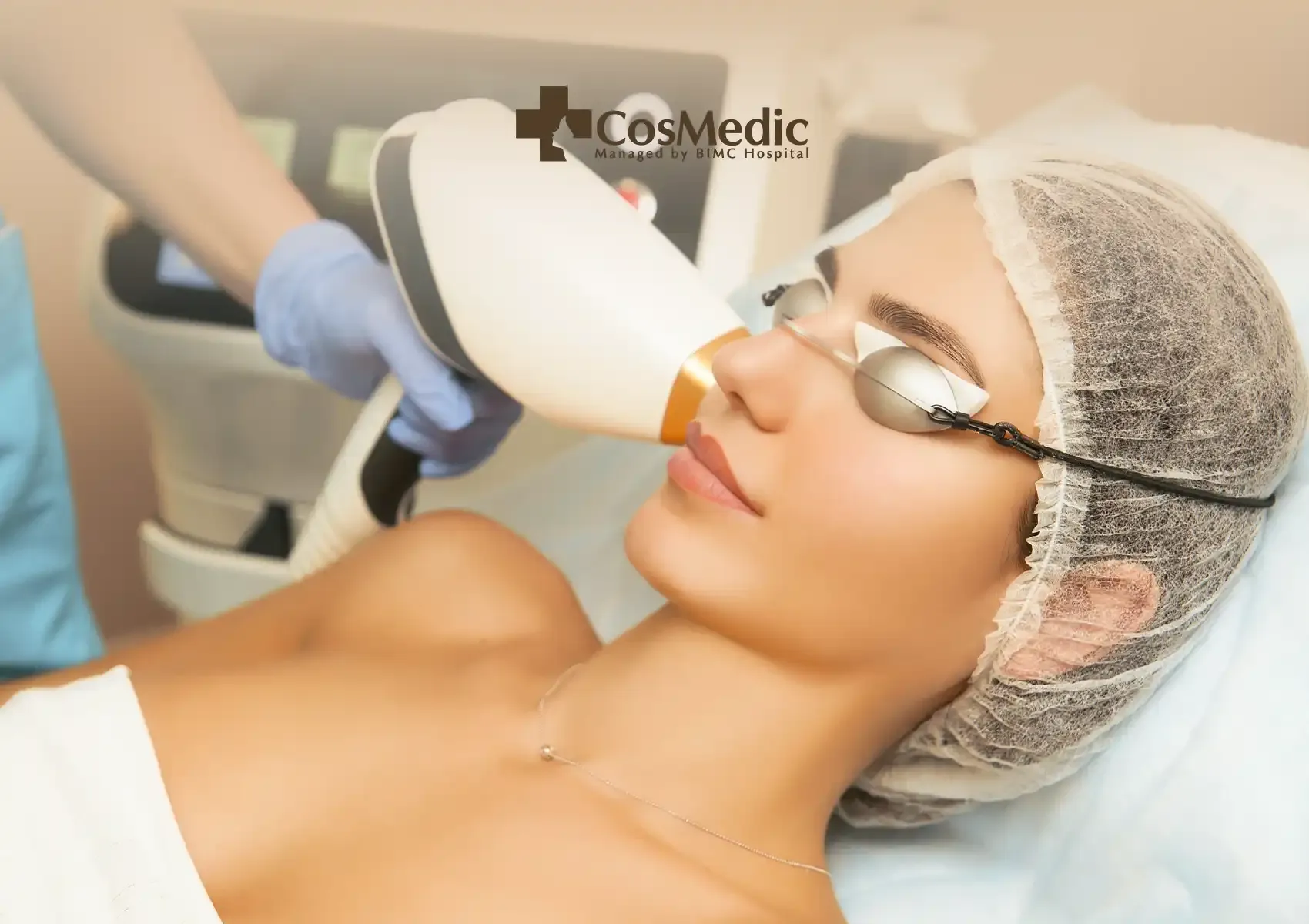
A pigmentation laser can help reduce the appearance of sunspots, age spots and other areas of unwanted pigmentation that may not respond sufficiently to topical skincare alone. It is often used to address pigmentation caused by sun exposure and uneven skin tone. At BIMC CosMedic, the Pigmentation Removal treatment uses a targeted laser to reach the excess pigment beneath the skin's surface.
Most sessions take 20 to 30 minutes and are performed by our credentialed dermatology and aesthetic medicine team, including dr. Theresia, dr. Risma, dr. Sissy and dr. Rosa, inside an ACHSI-accredited hospital setting. The treatment itself is brief. The care that follows it is what protects your result, and it is worth understanding beforehand.
How the Laser Targets Pigment
The laser delivers short pulses of light that are selectively absorbed by pigment in the skin. The energy disrupts the pigmented areas, allowing the body to gradually clear the treated pigment over time. Depending on the laser and the type of pigmentation being treated, the skin may temporarily darken, develop mild crusting or appear slightly red as it heals. These changes can be part of the normal recovery process, which is why gentle skincare and consistent sun protection are important after treatment.
What Your Skin Does in the First Days
It helps to know what to expect, because the early changes can look surprising if you are not prepared for them. After a pigmentation laser session, treated spots may temporarily appear darker before they begin to fade. Depending on the laser used and the type of pigmentation being treated, the darkened areas may gradually flake, shed or become less noticeable as the skin heals. This process can take several days or longer, and the timeline varies between patients. Your doctor will let you know what is typical for your treatment and skin.
The First 24 to 48 Hours
In the first day or two, the treated areas may feel warm or tender, similar to mild sunburn. Some redness and light swelling are common, and the spots often darken or take on a faint frosted appearance. Keep the skin clean and cool, and avoid heat or friction over the area.
Days Three to Seven
As healing continues, the darkened pigment forms fine microcrusts that flake away on their own. It is important to let this happen naturally. Picking or scrubbing can disrupt healing and increase the risk of permanent marks. Most patients find the flaking settles within about a week.
Day-to-Day Pigmentation Laser Aftercare
Effective aftercare relies on gentle, consistent habits that support the skin as it heals. Simple steps make a noticeable difference in recovery.
Gentle Cleansing and Moisturising
Use a mild, fragrance-free cleanser and gently pat the skin dry. Warm or lukewarm water is preferable, as hot water can irritate healing skin. Apply a plain moisturiser to maintain comfort and support the skin barrier, reapplying if the area feels dry or tight. If your doctor recommends a specific ointment for the first days, follow that advice instead of using stronger products.
Sun Protection and Shade
Sun protection is the most important part of aftercare. Treated skin is highly sensitive to light, and unprotected exposure is the main reason pigmentation can return. Your treatment plan includes a clear sun protection protocol. Stay in the shade, choose morning light instead of midday sun, and use a broad-spectrum SPF daily once your doctor confirms it is safe. Wearing a wide-brimmed hat outdoors adds another layer of protection.
What to Avoid During Recovery
Pause active skincare products while your skin recovers. Retinoids, exfoliating acids, and scrubs should be avoided until your doctor says it is safe to resume. For the first few days, avoid hot showers, saunas, and intense exercise that can raise skin temperature. Wait to use makeup on the treated area until flaking has completely settled.
Managing Comfort and Common Reactions
Most reactions are mild and resolve quickly. Redness, tenderness, and light swelling usually improve within a few days, and a cool compress can provide relief in the first 24 hours. There is a small risk of temporary darkening of the skin after laser treatment, known as post-inflammatory hyperpigmentation. Consistent sun protection and gentle care help reduce this risk. Closely following your doctor's instructions supports even recovery.
When to Contact Your Care Team
Certain signs mean you should contact your care team. If you notice increasing pain, spreading redness, blistering, oozing, or any signs of infection, or if the treated area does not start to improve as expected, reach out promptly. These reactions are rare, but early contact allows your dermatologist to review your skin and adjust your care if needed.
Realistic Results and Follow-Up
Results develop gradually rather than appearing instantly. As the treated pigment clears and the skin settles, treated areas may gradually become lighter and more even over the following weeks. Some pigmentation may improve after one session, while deeper, more extensive, or persistent pigmentation may require a series of treatments, with sessions spaced apart to allow the skin to recover.
The type, depth, and cause of the pigmentation all influence how many sessions may be appropriate, which is why a consultation is important before starting treatment. Your doctor can advise what is realistic for your skin and treatment plan.
A good outcome should look natural, with clearer and more even-looking skin rather than an obviously treated appearance. Consistent sun protection afterwards is also important for helping maintain the results and reducing the risk of pigmentation returning.
Talk Through Your Aftercare With Our Team
If you are considering a pigmentation laser during a stay in Bali, our concierge can walk you through the treatment, the recovery timeline, and the aftercare involved, and will reply within 24 hours. You are welcome to reach out through our contact page or by WhatsApp whenever you have questions.