
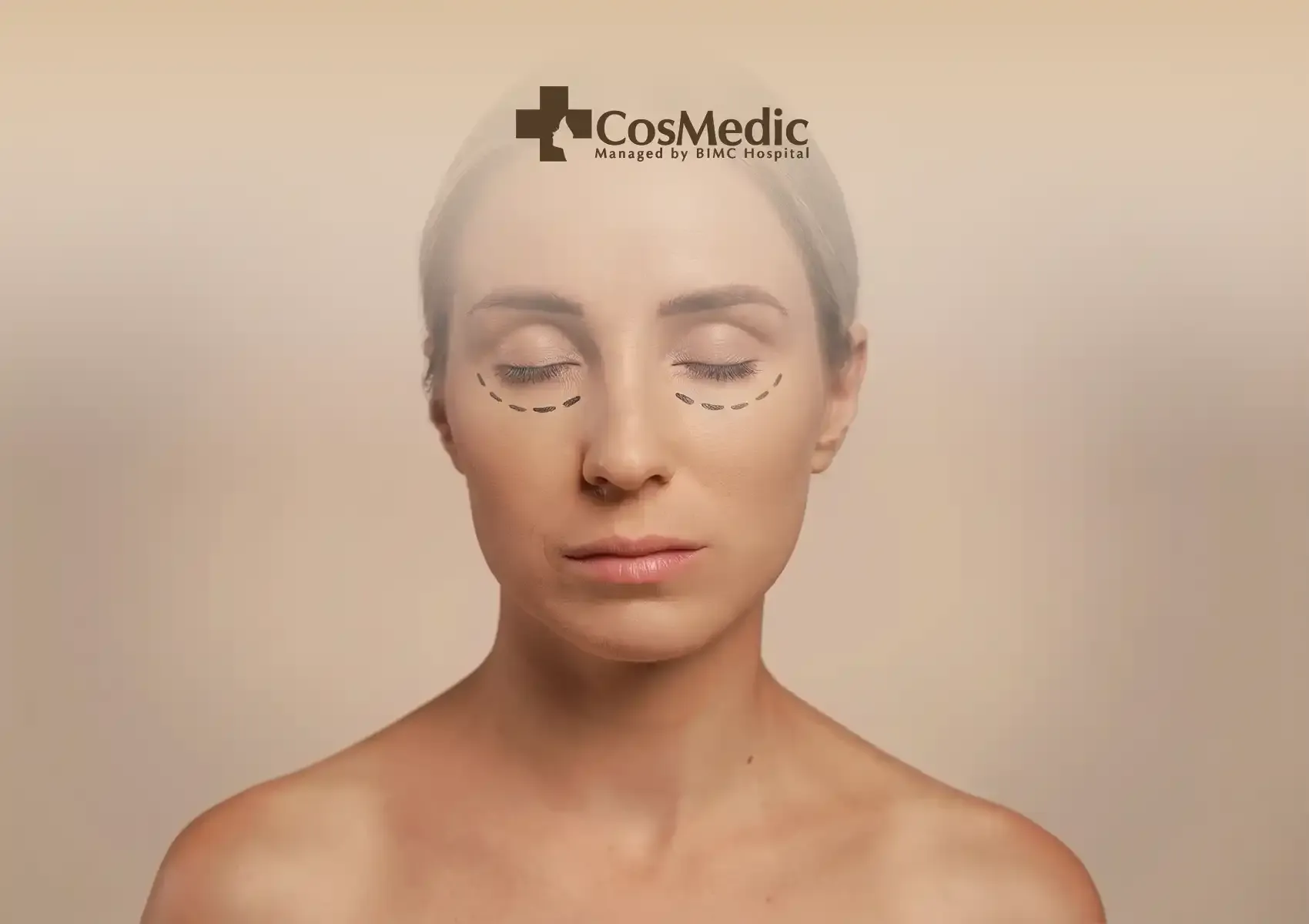
Puffiness, under-eye bags, and loose skin beneath the eyes can become more noticeable with age. While getting enough rest may help with tired-looking eyes, it won't address every cause of under-eye changes. Lower blepharoplasty, or lower eyelid surgery, may be an option for those looking to reduce these concerns.
Before deciding whether surgery is right for you, it's worth understanding what the procedure can address, who may be a suitable candidate, and what to expect during recovery. This guide covers the key points to help you explore your options and make an informed decision. If you'd like personalised advice, the team at BIMC CosMedic can discuss your concerns and help you understand the next steps.
What Lower Blepharoplasty Is
Lower blepharoplasty, also known as lower eyelid surgery, is primarily a procedure to address displaced or protruding fat beneath the eyes. Depending on your anatomy, it may also include careful refinement of the lower-lid skin, but it is not simply a skin-removal procedure.
This approach helps soften under-eye bags and crepiness while restoring a smoother, more natural contour. Unlike upper blepharoplasty, which focuses on the upper eyelids, lower blepharoplasty treats the area beneath the eyes, including fat placement and lower-lid support.
It is important to understand what this surgery can and cannot achieve. By reshaping the underlying structure, it can reduce the bulges and slackness that cast shadows and create a tired look. It works on the shape and support of the lower lid rather than surface pigmentation alone, so it is best suited to under-eye bags, crepiness, and laxity.
Bags, Puffiness and Loose Skin
With age, the fat pads that cushion the eye can slowly shift forward, while the skin and supporting tissues of the lower lid may loosen. This combination often leads to puffiness, under-eye bags, and a tired appearance.
Surgery can help by addressing the displaced fat that creates puffiness and, where appropriate, refining any excess lower-lid skin. This allows the lower lid to regain a smoother, more natural contour.
The Tear Trough and Lid-Cheek Transition
The tear trough is the gentle hollow where the lower eyelid meets the cheek. As facial tissues change with age, this area can become more pronounced and contribute to a tired look.
Rather than removing fat entirely, a careful approach repositions it to support the tear trough. This helps create a smoother transition between the lower lid and midface, while avoiding the hollowed appearance that overly aggressive fat removal can cause.
Whether You Are a Suitable Candidate
People who benefit most from lower blepharoplasty are usually in good health, have a specific concern surgery can address, and have realistic expectations about the outcome.
You may be a suitable candidate if you have:
1. Persistent under-eye bags or puffiness
2. Loose or crepey skin beneath the eyes
3. A prominent tear trough or uneven lid-cheek transition
4. Good general health and realistic goals
Non-surgical treatments such as anti-wrinkle injections, dermal fillers, laser resurfacing, or radiofrequency tightening may help soften mild laxity with little downtime. When there is more excess skin or more prominent fat, surgery is usually needed for the best result.
During a consultation, we can assess your under-eye area and talk through your options openly and without pressure, so you can decide what feels right for you.
In Experienced Hands at BIMC CosMedic
At BIMC CosMedic, lower eyelid surgery takes place in an ACHSI-accredited hospital, with a full anaesthesia team present for your safety.
The procedure is carried out under local or general anaesthetic and usually takes about two hours. It involves repositioning lower-lid fat and, where appropriate, tightening the skin to soften under-eye bags and crepiness.
The surgery is performed by dr. Suka, dr. Astri, dr. Indra, dr. Wara, and dr. Shita, all credentialed surgeons experienced in eyelid surgery. You will be supported from your first consultation through to follow-up.
What Recovery Typically Looks Like
Swelling and bruising are most noticeable in the first few days, then gradually settle. Using cold compresses and resting with your head slightly raised can help make the early days more comfortable. There is no overnight hospital stay, and with a general anaesthetic the procedure is managed as day care, so you can return to your accommodation the same day. Most people plan for 10 to 14 days of recovery in Bali before travelling home. By this time, most swelling has eased.
Follow-up continues until the stitches are removed, and medication is provided both during your stay and to take home. The fee covers the surgeon and team, all medication and consumables used during surgery, discharge medication, and follow-up until the stitches are removed. While healing, it is best to stay in the shade or gentle morning light instead of direct sun. The final contour develops gradually over the next few months.
Understanding the Risks Before You Decide
Lower blepharoplasty is a well-established procedure, and knowing what to expect is part of making a confident decision.
Most side effects are mild and settle on their own, such as:
1. Bruising or a small haematoma
2. Dry or irritated eyes
3. Brief blurred vision
4. Temporary changes in sensation around the lower lid
More significant issues, such as infection, difficulty fully closing the eyes, lower-lid drooping (ectropion), asymmetry that may need a minor revision, or visible scarring, are rare. Careful assessment, credentialed surgeons, and an ACHSI-accredited hospital help keep these risks low.
Why a Considered Result Looks Like You
The goal is not a dramatic change, but a subtle improvement. A well-judged result leaves you looking refreshed, not noticeably altered. By preserving fat rather than removing too much, the under-eye area stays soft and avoids hollowing at the tear trough. Often, the best result is the one that simply looks natural.
Ask BIMC CosMedic What Suits Your Eyes
If you are thinking about lower blepharoplasty during your time in Bali, our team is here to talk through your options and answer any questions before you decide. You can contact us through our contact page or WhatsApp, and our concierge will reply within 24 hours.