
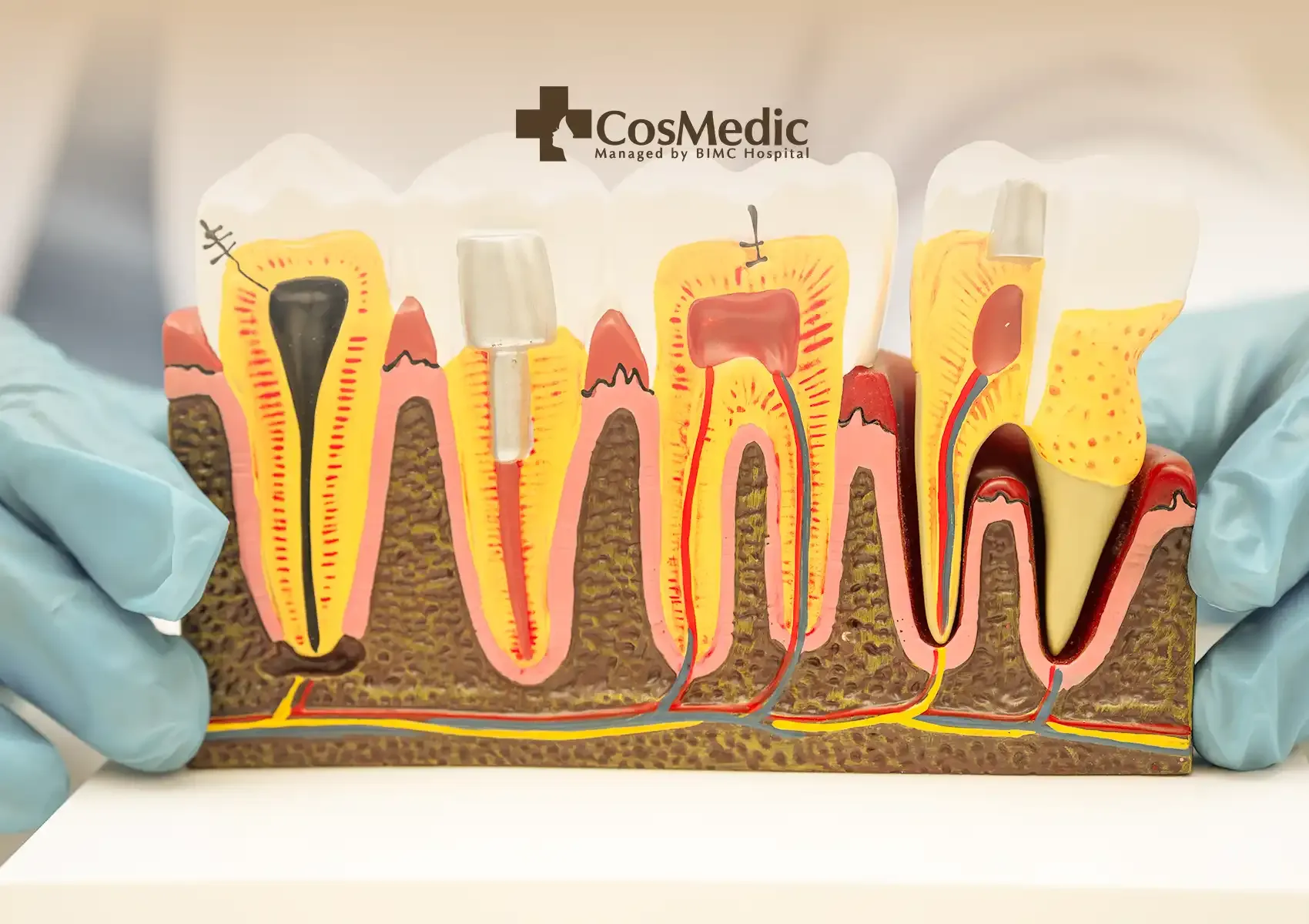
When you have a painful or badly damaged tooth, the main question is whether you can save it or need to replace it. This is what lies at the centre of the Dental Implant vs Root Canal decision. Although these treatments are often discussed together, they serve different purposes. Understanding what each option involves, and when each is appropriate, can help you choose what feels right for you.
Two Goals, Not Simply Two Procedures
If a tooth is badly infected or damaged, root canal treatment and dental implants offer two different paths. A root canal focuses on saving your own tooth by removing infection from inside it. A dental implant replaces the tooth with an artificial one when saving it is no longer possible. The first step is to ask whether you can still keep the tooth. Once you know what each treatment involves, the decision often becomes clearer and less overwhelming.
What a Root Canal Treatment Involves
A root canal treats infection inside a tooth. The dentist removes the infected or inflamed tissue, carefully cleans and shapes the inside of the tooth, and then seals it. Most of the time, a crown is placed afterwards to protect the tooth and restore normal chewing.
The root canal itself is often completed in one or two visits, while the final crown or restoration may require an additional appointment. Local anaesthetic is used to keep you comfortable throughout the treatment.
When a Root Canal Is Usually Recommended
A root canal is usually recommended when enough healthy tooth remains to restore, even if the infection has reached the inner part of the tooth. Dentists aim to preserve your natural tooth whenever possible, so if the tooth can be saved, this is often the first choice.
If a tooth can be restored, root canal treatment followed by a strong final restoration allows you to keep your own tooth and avoid extraction or implant surgery. Even if much of the tooth is damaged, a root canal may still be possible as long as enough healthy tooth remains to achieve a reliable result, usually protected by a full-coverage crown.
A preserved tooth also keeps its periodontal ligament, proprioception, and natural position in the bite, which an implant cannot fully reproduce.
What a Dental Implant Involves
A dental implant is used when a tooth cannot be saved. The damaged tooth is removed, and a small titanium post is placed in the jawbone to act as a new root. Over the next few months, the bone gradually bonds to the post, and once healing is complete, a crown is attached. This process takes longer than a root canal, but it can provide a stable and natural-looking replacement for your missing tooth.
When an Implant Is Usually Considered
An implant is usually recommended when a tooth is too broken, decayed, or weak to restore, or when the tooth is already missing. In these cases, a root canal is not possible, and replacing the tooth with an implant is often the best long-term solution.
Dental Implant vs Root Canal, an Honest Comparison
No single option is always better. Each treatment suits different situations, so the most helpful comparison is a practical one based on your needs.
| Factor | Root canal | Dental implant |
|---|---|---|
| Goal | Save the natural tooth | Replace the tooth |
| Treatment timeline | Often completed in one to two visits, plus final restoration | Usually completed over several months, in stages |
| Recovery | Usually mild soreness for a few days | Longer healing, including several months of bone integration |
| Long-term survival | High | High |
| Initial cost | Lower | Higher |
| Best suited to | A restorable tooth | A tooth that cannot be saved |
Survival and How Long Each Tends to Last
Both root canal treatment and dental implants can provide high long-term survival and predictable outcomes when appropriately selected and properly maintained. Current evidence does not consistently demonstrate that dental implants are superior to root canal treatment for a restorable natural tooth.
When complications occur, they can differ. A root-canal-treated tooth may eventually require extraction, while an implant may need additional treatment if complications develop. Neither option eliminates the possibility of future problems, so regular dental check-ups and good oral hygiene remain important for either treatment. This is why a personal assessment with examination and imaging is essential.
Cost Over Time
Cost is another difference between the two options. A root canal usually costs less upfront, while an implant requires a higher initial investment because it replaces the entire tooth. Over time, the cost difference may shrink, but the exact amount depends on your tooth, its location, and the type of restoration needed. It is best to discuss costs as part of your personal treatment plan, rather than relying on a fixed price.
How the Decision Is Usually Made
In reality, the decision is almost never based on just one factor. Your dentist will consider your tooth's condition and your overall situation to help guide the choice.
What Your Dentist Weighs With You
Survival and cost matter, but they are not the only factors. Before recommending a treatment, your dentist will assess whether the tooth can be restored, where it sits in the mouth, the health of your gums and surrounding bone, the aesthetics, your general health and your own preferences.
Two people with similar dental problems may be guided toward different treatments, depending on their individual needs. A careful consultation, including an examination and imaging, helps turn general advice into a plan that fits you personally.
A Result That Simply Lasts
The best result is often the one that simply works well for years, whether that means keeping your own tooth with a root canal or replacing it with a well-placed implant. Good dentistry avoids extremes: it doesn't remove a tooth that can be saved, and it doesn't keep a tooth that cannot. The goal is to choose the option that will stay comfortable and functional for you over the long term.
Talk Your Options Through With Our Dental Team
If you are weighing the Dental Implant vs Root Canal decision during your visit to Bali, our dental team can examine your tooth, take any needed imaging, and explain what each option would mean for you. Qualified dentists provide all treatment in an accredited hospital, so you can decide with confidence. You can reach our concierge through the contact page or WhatsApp, and they usually reply within 24 hours.