
Dental implant surgery is a procedure that often brings up questions about pain. It is reasonable to ask whether a dental implant hurts before deciding on treatment, and the answer is usually more reassuring than many expect.
The procedure is performed under anaesthesia to minimise pain during surgery, although you may still feel pressure or movement. Some soreness is normal in the days after, but for most people it is less intense and shorter-lived than expected. Knowing what to expect at each stage can help ease concerns.
Is a Dental Implant Painful During Surgery?
During the procedure, the area around the tooth is fully numbed with local anaesthesia. Once it takes effect, the nerves that carry pain signals are blocked, so most patients feel pressure, a gentle vibration, and a sense of the work being done rather than pain itself.
At BIMC CosMedic, implant treatment is performed within our accredited hospital setting by our team of dentists.
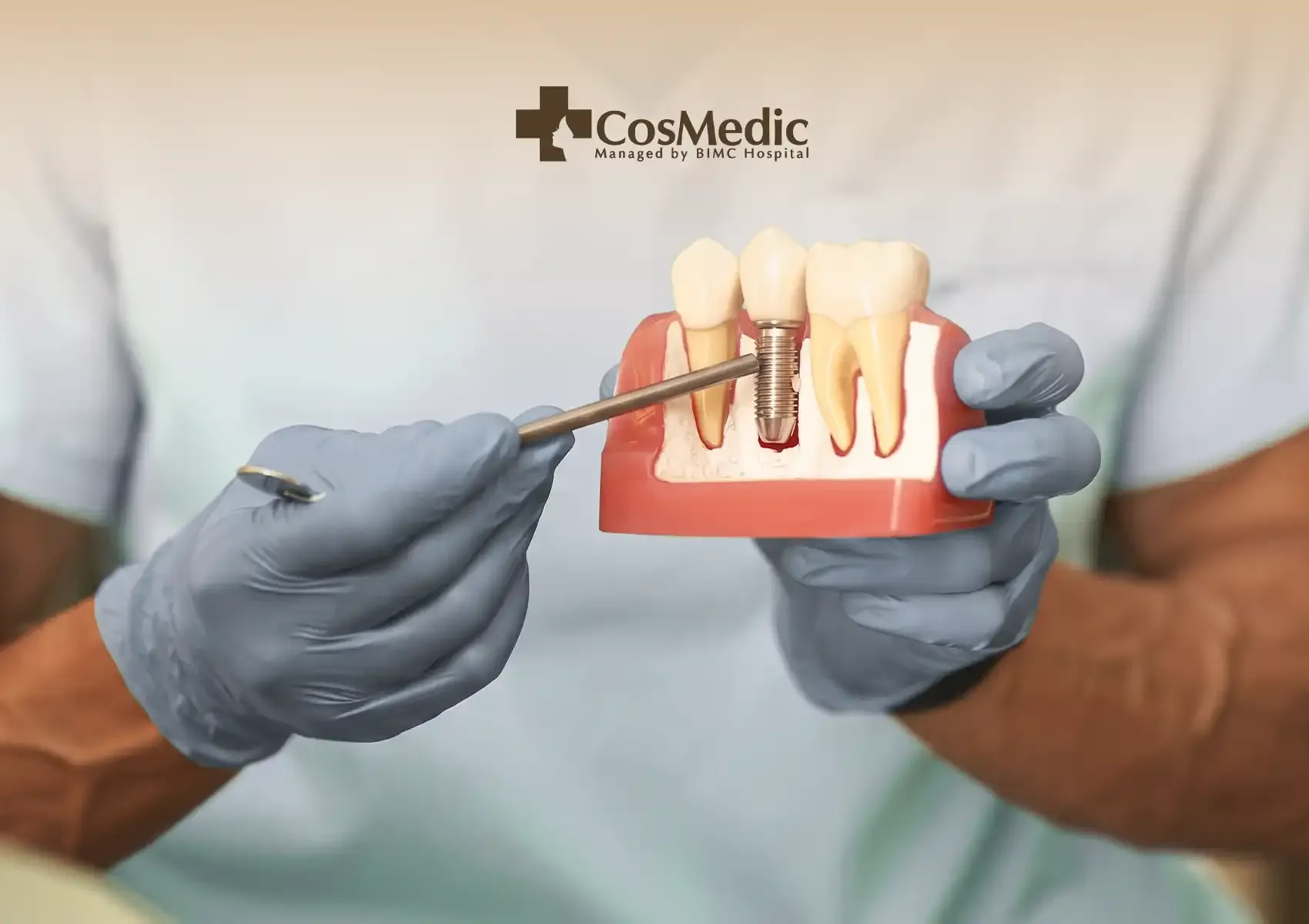
A single dental implant involves placing a small titanium implant into the jawbone to replace a missing tooth. The implant then undergoes a natural healing process called osseointegration, during which the implant integrates with the surrounding bone over the following months. The crown may be quoted separately, depending on the treatment plan and individual case.
What the First Days Usually Feel Like
Once the anaesthesia wears off, usually a few hours after surgery, some discomfort is normal. Patients often notice a dull ache, swelling, and tenderness around the area, much like after a tooth extraction. This is part of the normal healing process. For most, the soreness is most noticeable in the first two or three days and then gradually improves over the week.
Simple steps can help manage discomfort. Using a cold compress on the cheek reduces swelling, and taking pain relief as recommended is most effective when started early. Eating soft foods, chewing on the opposite side, and avoiding hot drinks, alcohol, and smoking all support healing. Taking it easy for the first day or two also helps recovery go more smoothly.
When Discomfort Is Worth a Closer Look
Most discomfort after surgery follows a predictable pattern: it is strongest early on and then fades. If pain increases after the third or fourth day, swelling gets worse, or you notice fever, a persistent bad taste, or numbness that does not go away, it is important to contact your dentist promptly.
These signs are uncommon, but knowing them helps. Early review is easier than waiting to see if things improve. Dentists prefer to check and find nothing wrong rather than have you worry at home.
Why the Experience Is Often Gentler Than Expected
Many patients are surprised by how little discomfort they experience compared with what they expected. Careful preparation, a thorough consultation, appropriate anaesthesia, and treatment in an accredited hospital setting can all help make the procedure more predictable and keep discomfort under control.
Everyone’s experience is different. The number of implants, whether bone grafting is needed, and how your body heals can all affect your recovery, so timelines vary from person to person. Your treatment is planned around your individual needs rather than a fixed template. Knowing what to expect and having your questions about pain answered clearly can also help reduce anxiety before the procedure.
Have Your Questions Answered First
If concerns about pain have made you hesitate, starting with a conversation can help. Our concierge can explain the dental implant process, what recovery is usually like, and answer your questions with no obligation to book. Asking about pain is important, and it is best to raise these questions early. You can contact us on WhatsApp, and our concierge will reply within 24 hours.