
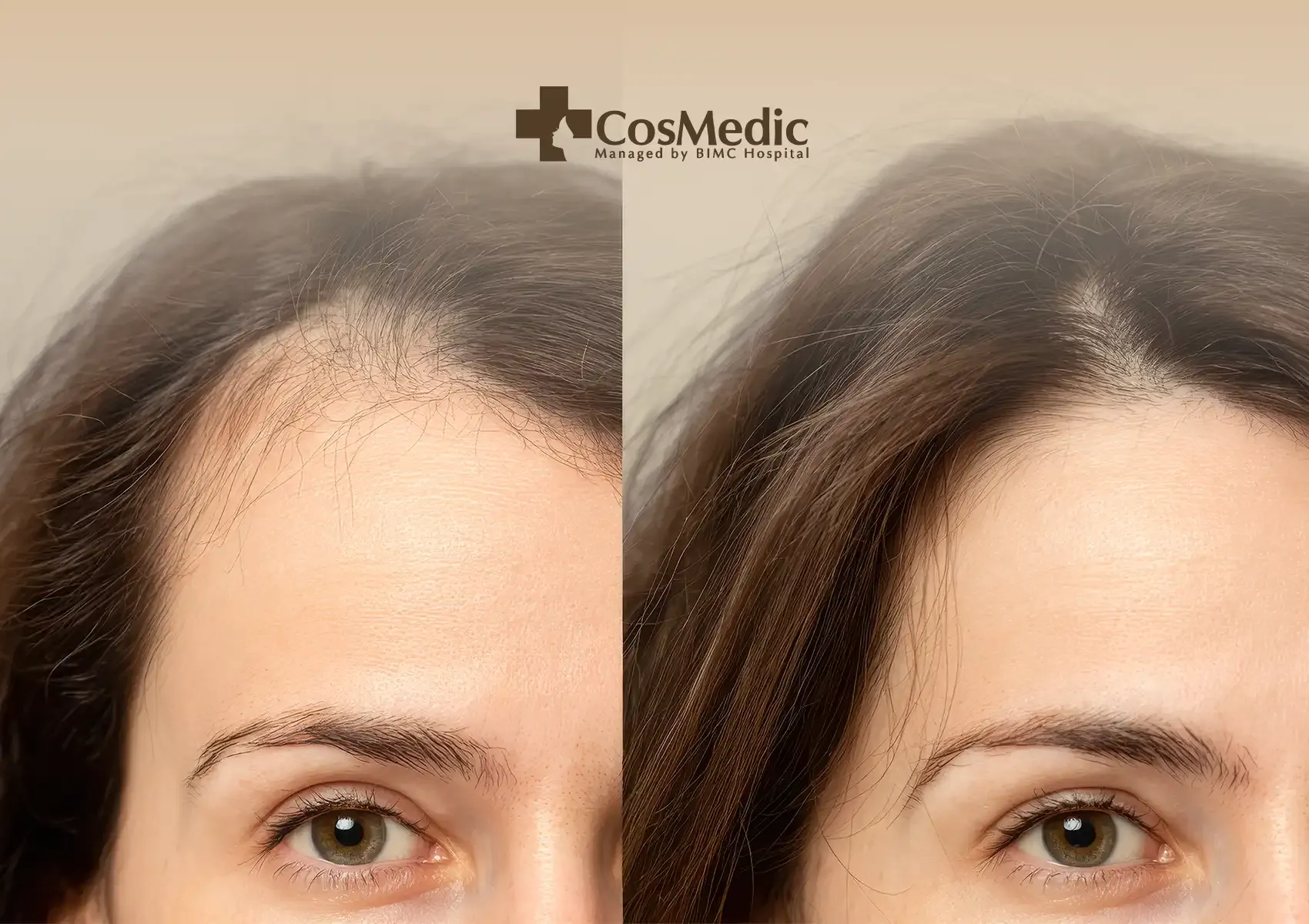
For most people, the harder question is not whether to have a hair transplant but what the months afterwards will actually look like. An FUE transplant generally follows a predictable recovery pattern, although the scalp may settle within a couple of weeks while the visible result takes far longer to emerge. This guide walks through the timeline stage by stage, with the understanding that the exact pace varies from patient to patient.
What Is a FUE Hair Transplant?
Follicular Unit Extraction, or FUE, is a minimally invasive hair transplant. Individual follicular units are removed one by one from a donor area, usually the back and sides of the scalp, and placed into the thinning region. Because each unit is taken separately, an FUE hair transplant leaves only tiny circular micro-punctures rather than a linear scar, and these become imperceptible once the surrounding hair grows back. This is what distinguishes it from the strip, or FUT, technique.
FUE is far less invasive than the older strip method, though it remains a surgical procedure performed under local anaesthetic. At BIMC CosMedic, it is performed by a dedicated lead surgeon and certified technicians using Sapphire FUE within an ACHSI-accredited hospital setting. You can see the full details on the hair restoration page.
How the Procedure Works
An FUE session begins with a consultation and hairline design, during which donor density is assessed and the new hairline is planned to suit your facial proportions. The follicles are then extracted one at a time, tiny channels are created in the recipient area at the correct angle and direction, and the grafts are placed individually. Duration depends on the number of grafts, with larger sessions running up to eight hours and occasionally split across two days.
The FUE Transplant Recovery Timeline
This is where patience matters most. The scalp heals within a couple of weeks, but the hair itself follows a slower, natural cycle.
Days One to Ten
The donor dressing stays in place until your day-two review, when clinical staff remove it and perform your first wash. Small crusts form at the graft sites and separate naturally within seven to fourteen days, and it is important not to pick or scratch them. Sleeping on your back with the head elevated for the first week or so helps limit swelling. Most patients stay on-island for around ten days, and flying home is generally comfortable within a week.
Weeks Two to Four, the Shedding Phase
The transplanted hairs typically shed during this period. This is expected and is known as shock loss. The follicles stay in place beneath the skin and are simply resetting before they regrow. It is the stage that worries people most, because the scalp can briefly look much as it did before the procedure.
Months Three to Eight
New hair usually begins to appear from around the third month. It comes through fine and sparse at first, then thickens gradually. Growth is uneven across the scalp at this stage, which is entirely normal.
Months Nine to Twelve
By nine to twelve months, most of the result is visible, and the full outcome, including texture and density, is typically assessed at twelve months. Because the transplanted follicles are drawn from the donor zone, the area genetically resistant to thinning, the result is considered permanent. A transplant does not prevent hair loss from continuing in other areas of the scalp, so your treatment plan may also include options such as minoxidil, finasteride, or PRP to help support your existing hair.
Caring for Your Scalp While It Heals
Early aftercare is simple, but it matters. Keep the grafts dry for the first 48 hours, then wash gently with a mild shampoo from around day five, patting rather than rubbing. Avoid strenuous exercise, sweating, swimming, saunas, and alcohol for two to three weeks, and protect the healing scalp from direct sun, favouring shade and gentle indoor light over exposure in the early weeks. Any minoxidil or finasteride is resumed only when your surgeon advises, usually after two to four weeks.
Talk Through Your Timeline Before You Decide
The best hair transplant is the one nobody notices, a hairline that suits your face and your age rather than one that announces itself. That natural result depends as much on unhurried, well-supported healing as on the surgery itself, since the hair reveals its final shape only once the full cycle has run.
This is where recovering in Bali can help. Patients heal through the early days in the quiet, private setting of Nusa Dua, with treatment in ACHSI-accredited theatres under the care of dr. Wara, and twelve months of telehealth follow-up that provides support through the months it takes for the hair to grow after you fly home.
If you are considering an FUE transplant, our concierge can walk you through the recovery timeline, answer your questions, and reply within 24 hours. You can reach them through the contact page or by WhatsApp, with no pressure to book.