
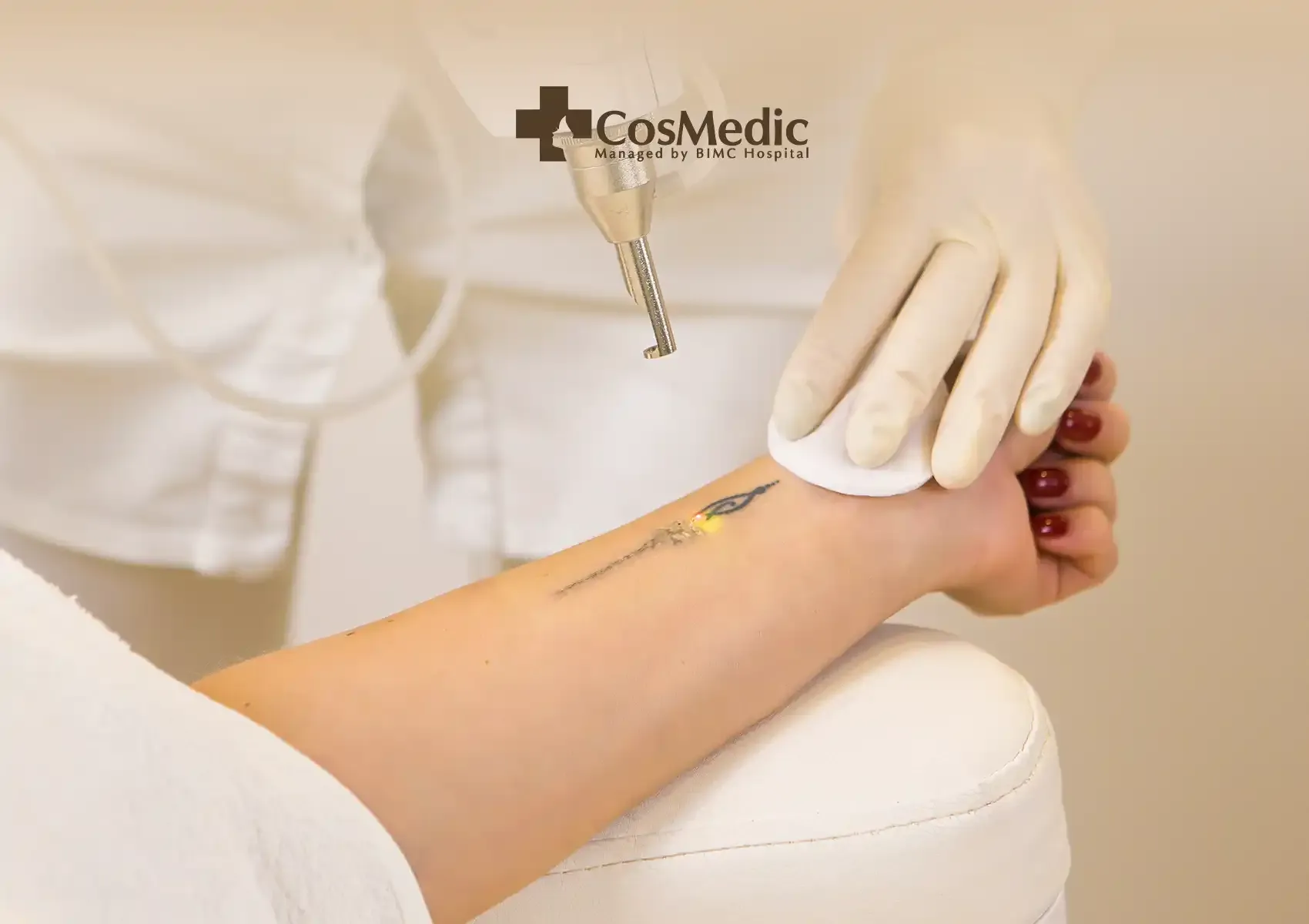
Deciding to remove a tattoo is usually a considered choice rather than a sudden one. Laser tattoo removal is the most established way to fade or clear unwanted ink, and it works gradually across a series of sessions rather than in a single visit. Understanding how the process unfolds, what shapes the result, and how the skin heals in between can make the decision feel calmer and more informed. This guide walks through each stage, plainly and honestly, so you know what to expect before you get in touch.
How Does Laser Tattoo Removal Work
Tattoo ink sits in the deeper layer of the skin, which is why it remains in place for years. Laser tattoo removal works by directing short, high-energy pulses of light at the ink. The pigment absorbs that energy and breaks apart into much smaller particles. At BIMC CosMedic, this is done with a Q-switched laser, a well-established device for tattoo removal.
Your body's own immune system then clears those fragments away slowly, over the weeks that follow each session. This is why a tattoo fades in stages rather than disappearing all at once. Because the tattoo ink is cleared gradually by the body rather than removed by the laser in one go, the spacing between laser sessions is a necessary part of the process.
Who Carries Out the Treatment
Laser treatment is a medical procedure. At BIMC CosMedic, it is performed by credentialed physician within an ACHSI-accredited hospital setting in Nusa Dua. The tattoo, its ink, and your skin type are assessed first, as these shape the approach.
Before any laser sessions begin, a consultation is arranged. The specialists who carry out this treatment examine the tattoo, ask about its age and how it was applied, and review your medical history and skin. This is also when realistic expectations for your tattoo are discussed.
What Affects How a Tattoo Responds
No two tattoos clear in exactly the same way, and how well tattoo removal works depends on a few main factors.
Ink Colour and Depth
Colour is one of the strongest influences. Black and darker inks tend to absorb laser light well and usually respond most readily. Greens and blues are often more stubborn, and lighter shades such as yellow can be the hardest of all. Professional tattoos, placed deeper in the skin, also generally need more laser sessions than amateur ones, which usually sit closer to the surface.
Skin Type and Tattoo Age
Your skin type guides which laser settings are appropriate, and it influences how gently the process needs to be paced to protect the surrounding skin. The age of the tattoo plays a part too. Older, already-faded tattoos have often begun to break down on their own and can respond a little more easily than fresh, dense ink. At the consultation, these details are weighed together so the plan suits your tattoo rather than a fixed formula.
What to Expect During and After Each Session
During the Session
A single session is usually short, often a matter of minutes depending on the tattoo's size. As the Q-switched laser passes over the tattoo, most patients describe the sensation as a series of quick, sharp flicks against the skin. Cooling and comfort measures make this more manageable, and the area is cared for afterwards.
Healing Between Sessions
In the days after treatment, it is normal to see redness, mild swelling, or some scabbing over the tattoo. This typically settles within a week or so with simple aftercare, such as keeping the area clean and protected. While the skin recovers, it is best kept out of direct sun and shielded with gentle morning light and shade rather than strong exposure. Most patients return to their usual routine straight away, though the treated skin needs a little patience while it heals.
As the body gradually clears the fragmented tattoo ink in the weeks following treatment, the tattoo can become progressively lighter over a series of sessions. Because the treatment does not involve surgery or injections, it is one of the non-injectable treatments offered by BIMC CosMedic.
How Many Sessions, and What a Realistic Result Looks Like
Tattoo removal takes time, and that is by design. Sessions are usually spaced several weeks apart so the skin can recover and the body can carry away the broken-down tattoo ink between visits. Rushing this offers no benefit and can be harder on the skin.
The number of laser sessions varies. Many tattoos need several, and denser or multicoloured work can need more. It is worth being honest here. While a great many tattoos fade substantially or clear well, some do not vanish completely, and a faint shadow can remain. The aim is a considered result reached safely, not a promise of instant, total erasure.
Paced this way, the treatment stays gentle on the skin while steadily fading the tattoo. A licensed physician can give you a more realistic estimate once they have seen your tattoo in person.
Considering Laser Tattoo Removal in Bali?
If laser tattoo removal is something you have been weighing, the most useful next step is a calm conversation rather than a commitment. Our concierge can answer your questions, explain what a course of treatment might involve for your tattoo, and help you arrange a consultation with no pressure either way. You can reach us through our contact page or on WhatsApp, and the concierge replies within 24 hours.